
July 1945
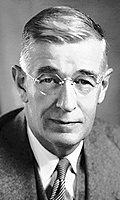
Vannevar Bush publishes an essay entitled “As We May Think” in which he described a hypothetical system of information storage and retrieval called “memex.” Memex would allow readers to create personal indexes to documents, and to link passages from different documents together with special markers.
October 1957
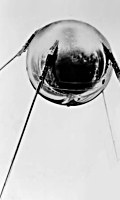
Soviet Union launches “Sputnik” into orbit, and throws American scientific community into turmoil. President Eisenhower authorises setting up the Advanced Research Projects Agency, ARPA.
1960
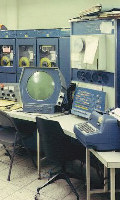
Benjamin Curley develops the first minicomputer, the PDP-1, at Digital Equipment Corporation.
1962
First commercial modems launched by AT&T.; They could transmit data at 300 bits per second (a modern broadband connection can transmit data at 300 billion bits per second!).
August 1962
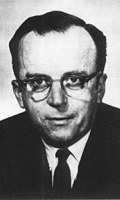
JCR Licklider proposes a network to enable ARPA researchers and contractors to work together more closely.
1963
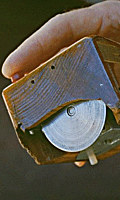
Douglas Englebart invents the mouse at the Stanford Research Centre.
1964
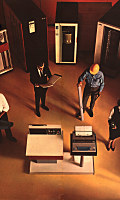
IBM announces the System 360, the first family of compatible computers.
1965
Ted Nelson presented a paper to the Association of Computer Machinery in which he proposed how elements in one text could be linked to related or identical elements in other texts. He coined the term hypertext, and in 1967 named his system for linking all the world’s documents Xanadu.

1968
Gordon Moore and Robert Noyce found Integrated Electronics (Intel) Corp.
September 1969
ARPA sets up ARPANET. It relies on two key technologies devised by Paul Baran, a distributed network and, packet switching which was also independently co-invented by Donald Davies.
March 1972
Ray Tomlinson writes a basic email send and receive program.
September 1973
Vint Cerf and Bob Kahn present a paper outlining Transmission Control Protocol, which was later to become TCP/IP, a key component of the Internet.
January 1975
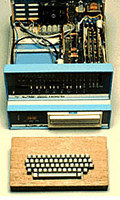
Altair 8800 becomes first mass-selling home computer – as a do-it-yourself kit. Paul Allen and Bill Gates write a BASIC compiler for it and other soon-to-be-launched home computers.
1975
John Vittel develops first all-inclusive email program, providing reply, forward and file capabilities.
1976
Seymour Cray designs and installs the first supercomputer, the Cray-1.

26 March 1976
HM The Queen sends her first email.
1 April 1976
Steve Jobs and Steve Wosniak launched their new Apple Computer and founded the firm of the same name.
1979
3Com founded by Bob Metcalfe who had invented the Ethernet.
CompuServe become first service to offer email to personal computer users.
27 October 1980
ARPANET halted by an accidental virus.
August 1981
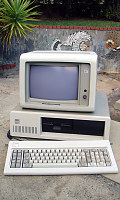
IBM PC launched, running on Microsoft’s MS-DOS operating system.
1983
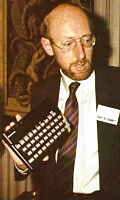
Sir Clive Sinclair launches the Sinclair Spectrum and achieves sales running at 15,000 units per week in the UK alone, selling millions worldwide.
1985
Microsoft release their Windows operating system, introducing the GUI concept to the mass market.
First domain name registered: symbolics.com.
1986
Commercial companies wooed on to the Internet to share the costs.
1987
UUNET founded.
1989
AOL service launched.
March 1989
Tim Berners-Lee writes a proposal at CERN for sharing files – the World Wide Web.

September 1993
Mosaic browser released, written by Marc Andreesen and Eric Bina.
April 1994
David Filo and Jerry Yang start Yahoo! as a hobby whilst at Stanford university.
March 1994
Mosaic Communications Corp founded. Later renamed Netscape, they launched their own browser in October 1994. In 1999 they were bought by AOL for $10 billion – a business that had been built on a product that was given away for free.
May 1994
Arizona law firm Canter & Siegel is the first to spam the Internet – they had their account cancelled.
1994
AOL provides Internet access to its one million customers who, totally ignorant of Internet etiquette become like a plague. “AOLer” coined as a derogatory term.
March 1995
Mark Griffin started building websites as a business. The rest is history 🙂
Tim Berners-Lee held a two day seminar to introduce the WWW to journalists – it was completely unknown to the general public at that time.